
Writerzen, develop the ultimate SEO learning hub
Writerzen is the SEO content software. This project aims to improve userflow and enhance engagement by providing intuitive solutions that improve user experience and drive better conversion rate.
My role:
I was involved in a multi-functional team with my fellow UX Designer, Design Lead, take responsibility for: User research, data analysis, userflows and testing

Final results:
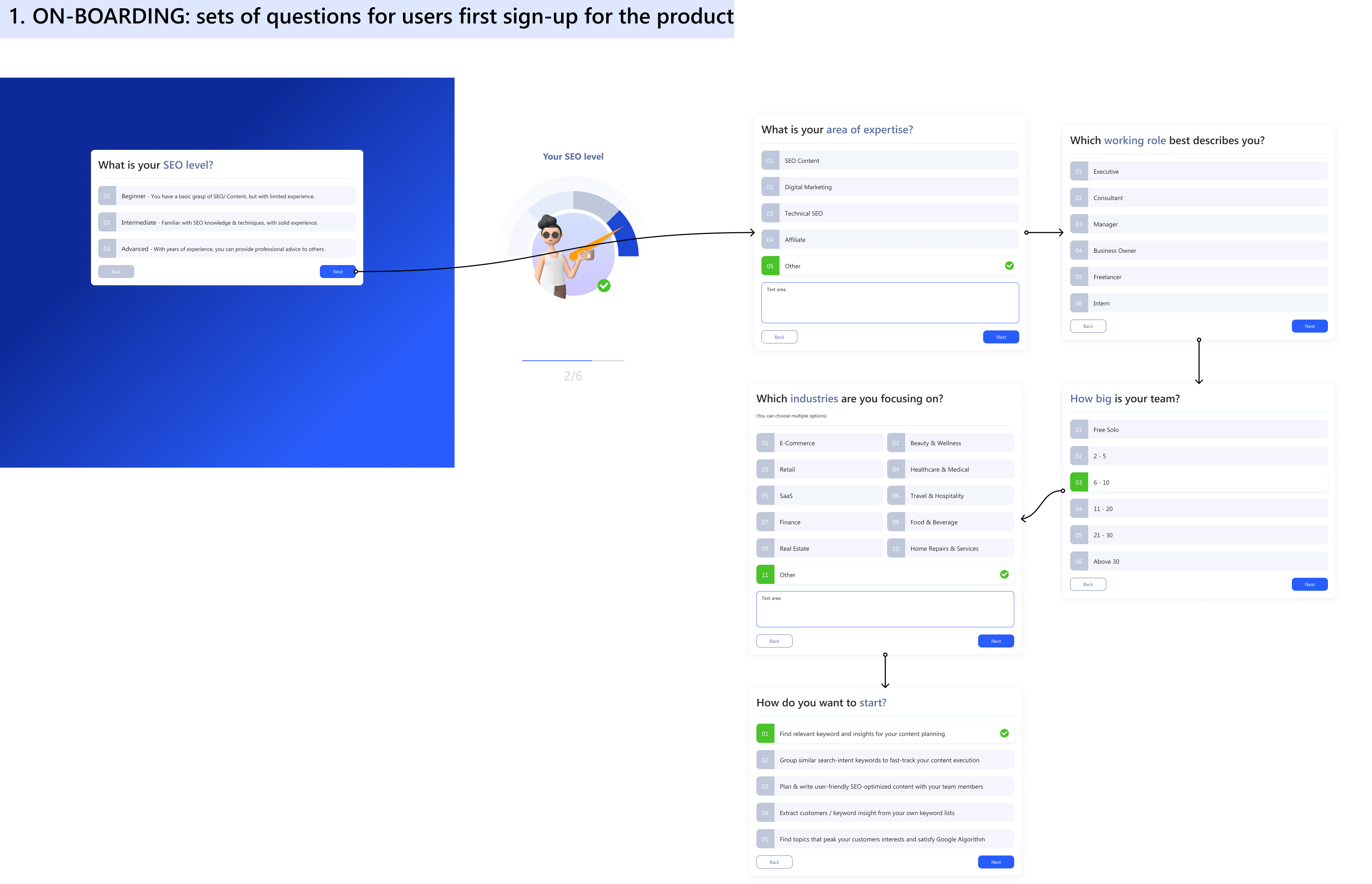
- Launched the onboarding quiz set user flows for SEO expert users.
- Conversion rate increases by 8,81%, and the sum of total trial users increases by 87,93% in next 3 months after launching
The on-board new SEO users Figma prototype can be found here


Results


Research and planning
Exploiting the user data based on the key metrics
To have a better understanding of user interaction with the current dashboard, I worked closely with the Marketing team to exploit the data (using Holistic & dataStudio) and examine how users were interacting with the tool step-by-step.
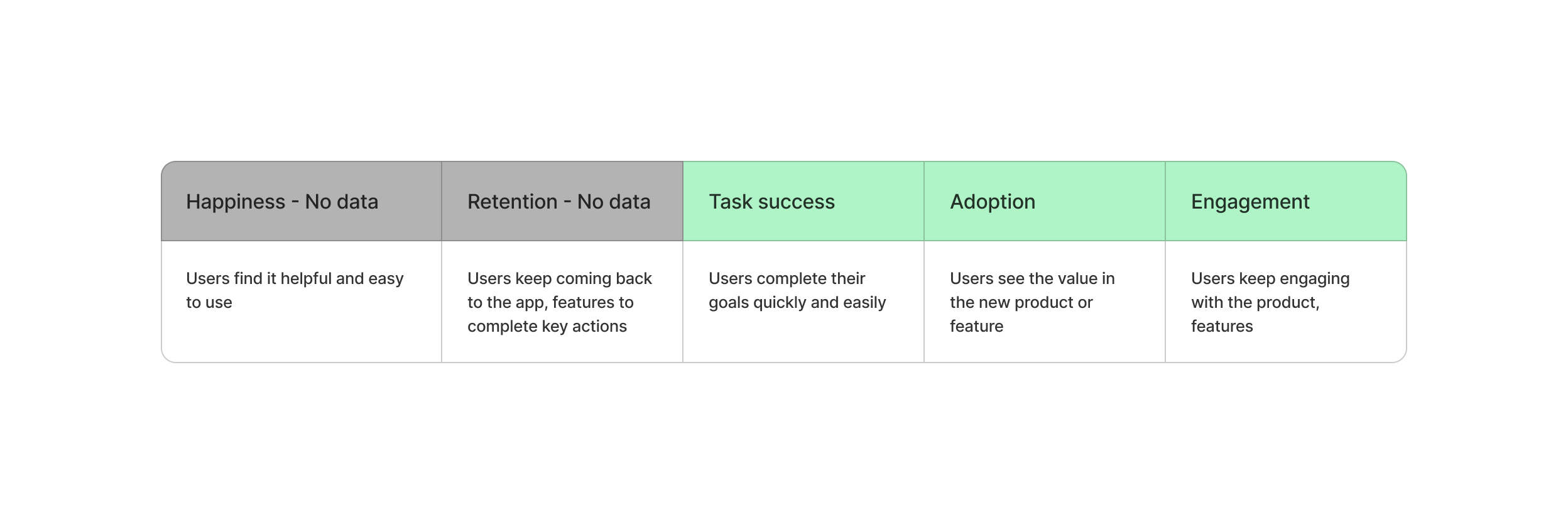
Following that, I implemented the HEART framework for analysing each feature that we had on the current website & looked at the overall product metrics based on: adoption, task success & engagement.
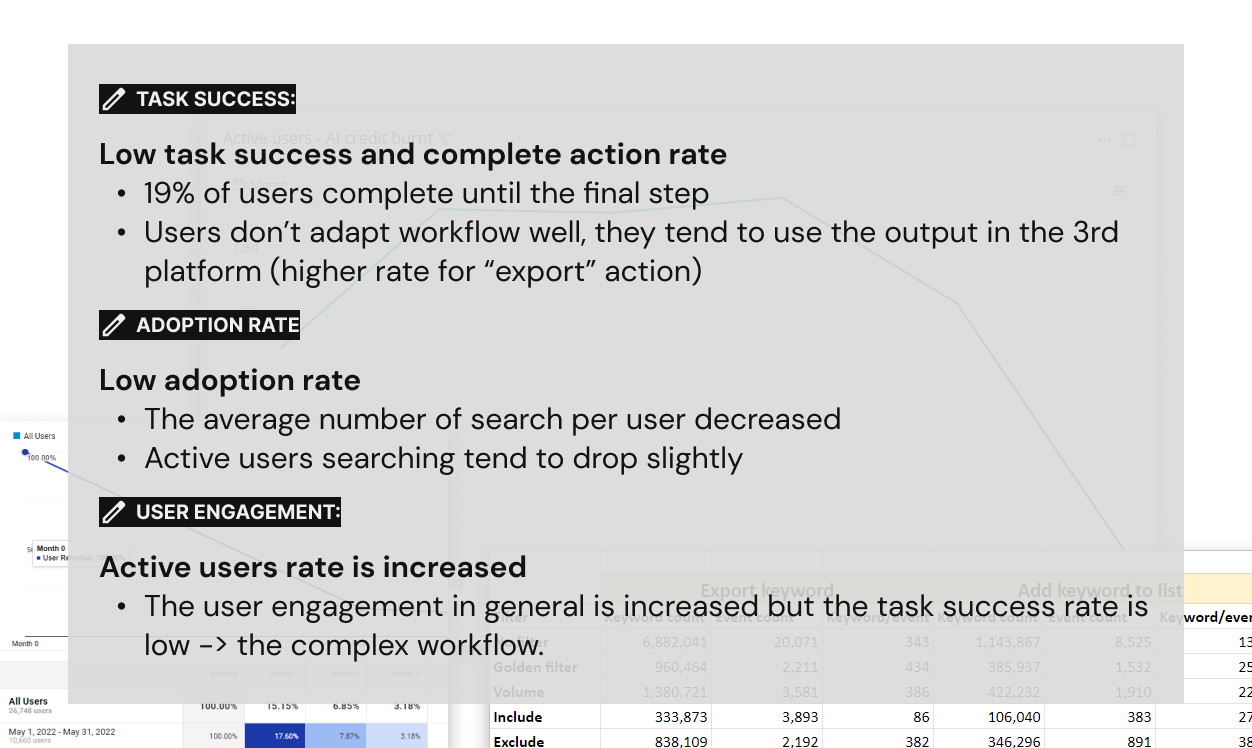
To have a better understanding of user interaction with the current dashboard, I worked closely with the Marketing team to exploit the data (using Holistic & dataStudio) and examine how users were interacting with the tool step-by-step.
Following that, I implemented the HEART framework for analysing each feature that we had on the current website & looked at the overall product metrics based on: adoption, task success & engagement.
Additionally, I obtained qualitative feedback from our internal customer success team to get more feedback/request features that we received from users on social media and the Writerzen community platform.
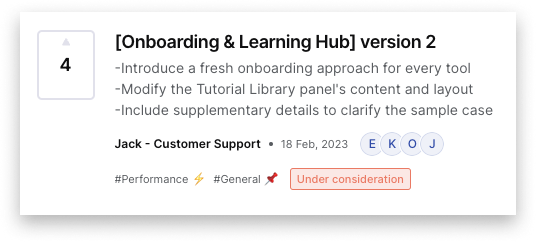
The toolset workflow is complicated and make it hard for users to works effectively, low task success and adoption rate. Instead of finished all steps, user often get stuck in the middle of the process and not completing all the steps to see the final results.
How to make the tool's workflow intuitive and easier for user to achieve desired outcomes?
Next steps to resolve challenge:
According to the analysing result, I come to the conclusion that some steps could be followed to improve the product function:
- Determining & focusing on a certain target user to get more actionable insights and find the effective solution to improve the task success and adoption rate.
- Simplify the workflow or develop the supporting service to help users getting familiar with the tool
------------
Exploring possibly solution for the product:
With the joining of Customer Success & Business Analysis team, we had the design sprint to come up with the potential solution for the design concept

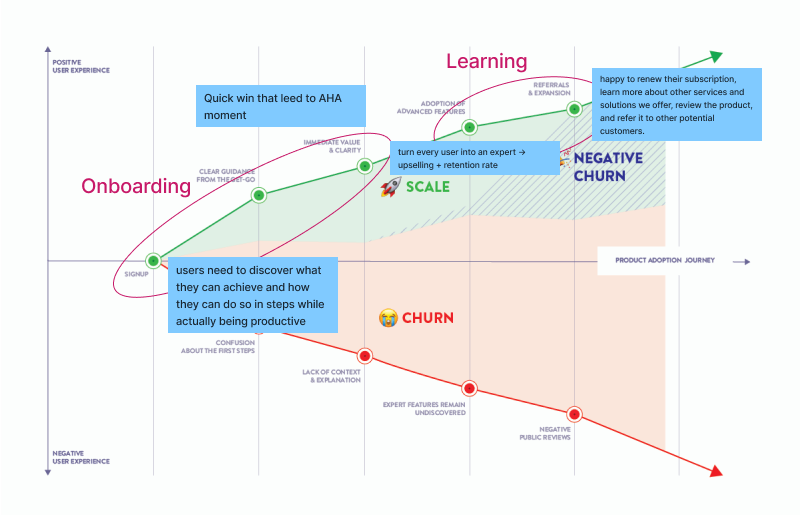
User adoption journey
Using the user adoption journey because I believe that it can help to ensure that the design aligns with the project goals & user needs.
The adoption journey shows the stages of users from awareness of product to drive them to start using from onboarding to learning process. Regardlessly, I can create more effective design solution that are likely to balance the user needs and company.
prototype
Sketching the final solution:


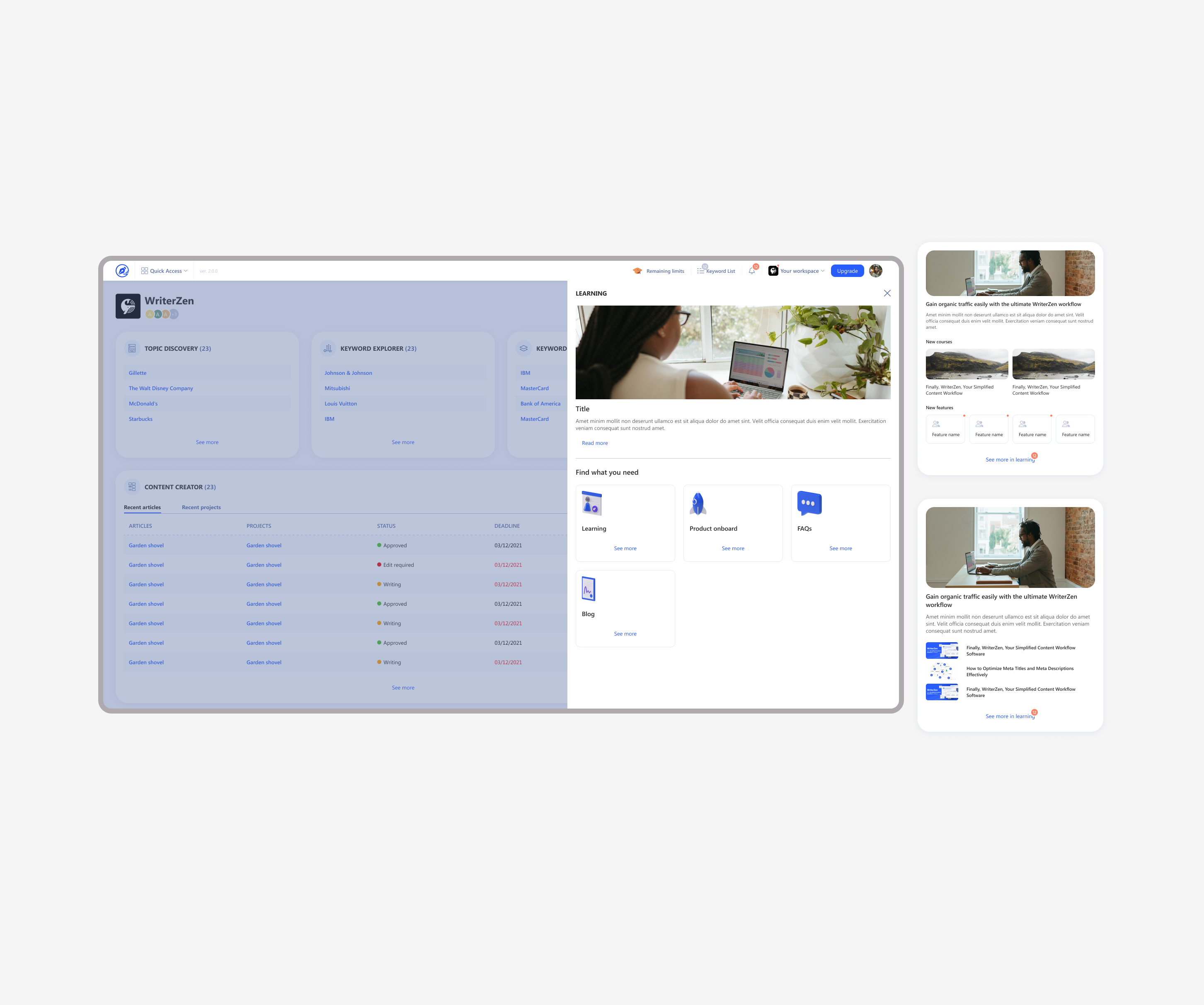
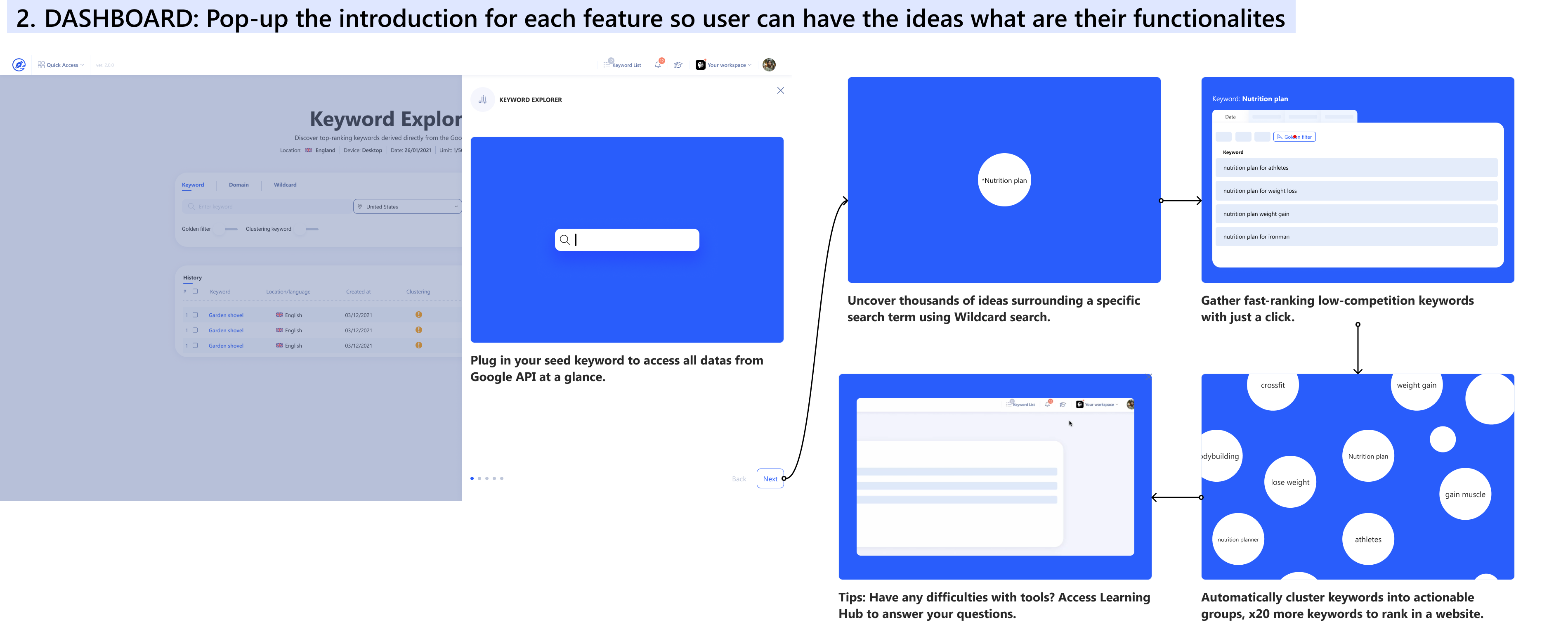
With the wireframe, based on the available design system & guidelines, we developed the high-fidelity prototype. The learning hub function aims to resolve the pain points for beginning users who are confusing with the complex workflow of the SEO toolset. The detail instruction for each feature and function that can help the beginner getting familiar with the tool. this feature also aims to increase the low adoption rate, so user can use the tool more effectively and improve the task output performance.
testing
Determining the criteria for usability & scorecard:
In this step, I utilise the scorecard, which is a useful tool in the testing phase of a UX design project after completing the prototype. The scorecard is developed based on the project's requirements and objectives, and it can include various metrics such as ease of use, efficiency, user satisfaction, and accessibility. By using it, I can identify areas that need improvement and make informed decisions to refine the design before finalising it.


Interview transcript & insights:
I firstly conduct the internal usability testing with the view to observing the efficiency of new functions
Based on the scorecard, I write the interview guide & transcript for the usability testing interview. The interview has three main sections pre-interview questions, practical tasks and post-interview questions. The SUS questionnaire was used in the late stage of the interview, after the post-text questions so users could rate our website based on their points of view.
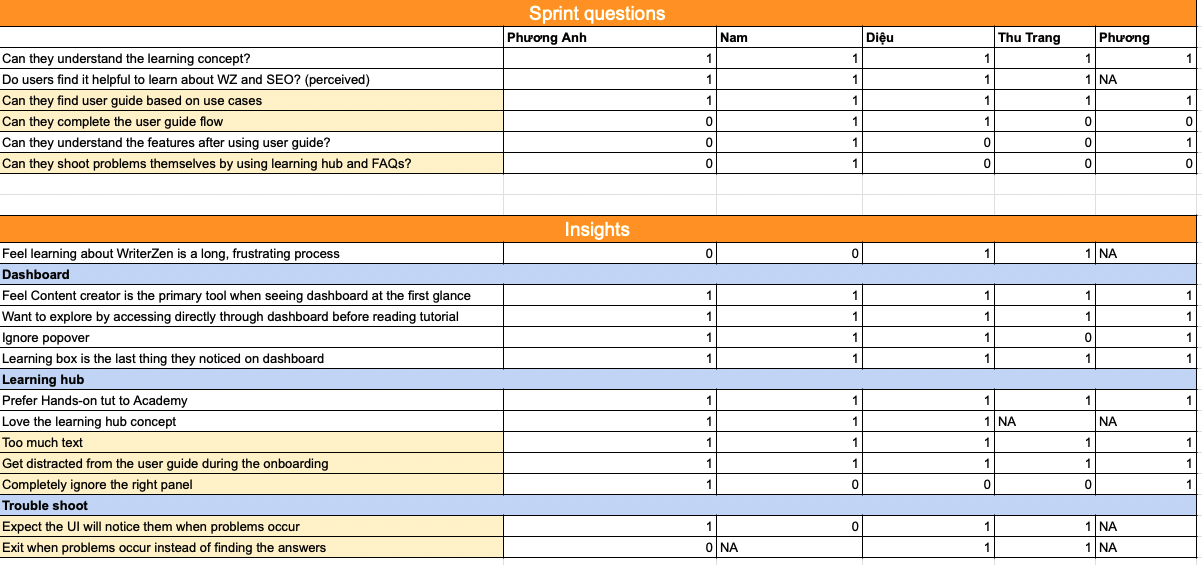
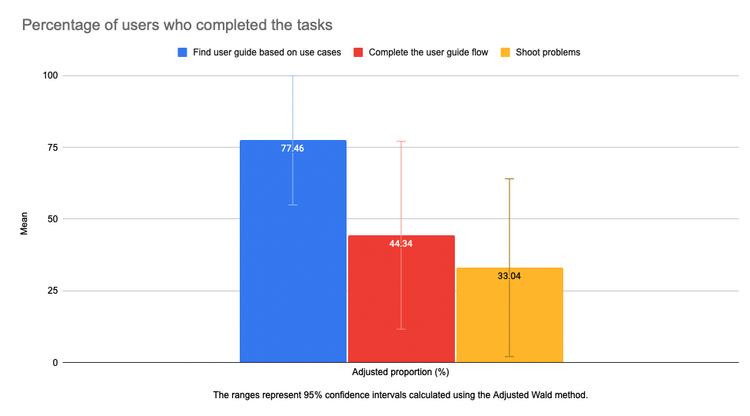
The data represented the percentages of users who can complete the tasks and the overall points that users rate for the new function.
As a result, it is evident that there are still a significant number of shot issues with the new function (33%) and that this rate could be declined in the future

The user's total response to the learning hub's SUS questionnaire was quite favourable (95% confidence level), suggesting that the new function may be assisting users in finding a solution to their Writerzen tool-related pain points.
reflection
L E A R N I N G
In brief, my ability to interpret data has improved as a result of the project, and I now comprehend how to incorporate the data findings into user experience research to improve product performance.
User research is crucial because it allows us to learn more about customers, their opinions, and how they interact with products. As a result, we can improve the quality of the products.
Some design issues are more challenging to resolve and launching a product's new function requires detailed research from many perspectives.
